Disclosure: This post contains affiliate links. As an Affiliate I earn from qualifying purchases, at no extra cost to you.
You found a niche. You spent evenings on the interior, the cover and the keywords. You hit publish on Amazon KDP or Etsy feeling proud, and then you refreshed your dashboard for a week. The number stayed at zero, or maybe one sale you suspect came from your aunt.
If that sounds familiar, you’re not alone. Publishing a book isn’t the same as selling one. With millions of listings out there, yours can sit buried in the search results unless someone is sending shoppers its way.
In this ReaderRoute review, I’ll look at ReaderRoute, a tool built for KDP, Etsy and low-content sellers who want a simple weekly system for getting their books seen. We’ll cover what it is, who made it, what’s inside, its pros and cons, and who it suits best.
ReaderRoute
What Is ReaderRoute?
ReaderRoute is a weekly marketing system built for Amazon KDP, Etsy and low-content sellers. Its job is simple: help you get your books in front of the people who actually buy them, after you hit publish.
Every week, ReaderRoute hands you a full week of done-for-you posts. They are written for the shoppers who pay for your books, so you aren’t left staring at an empty box on Pinterest wondering what to say.
Here is what the system does:
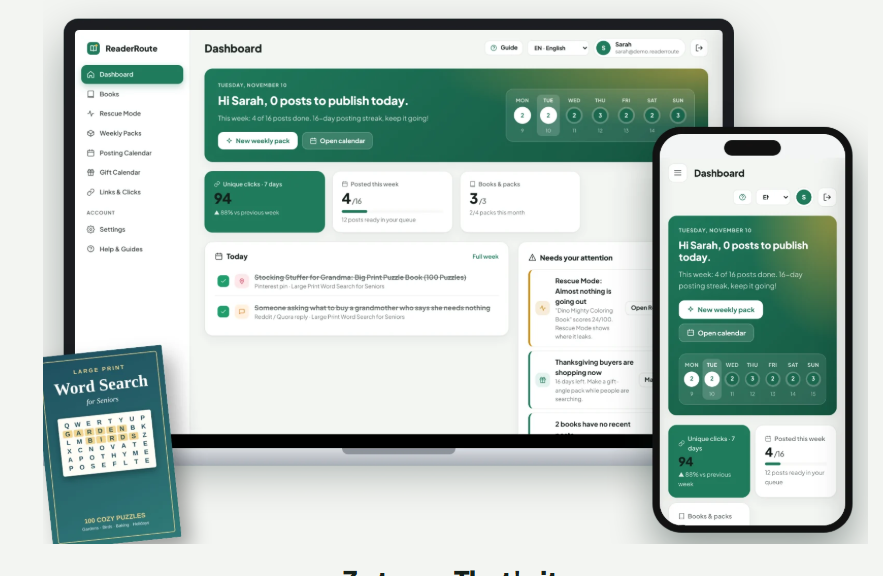
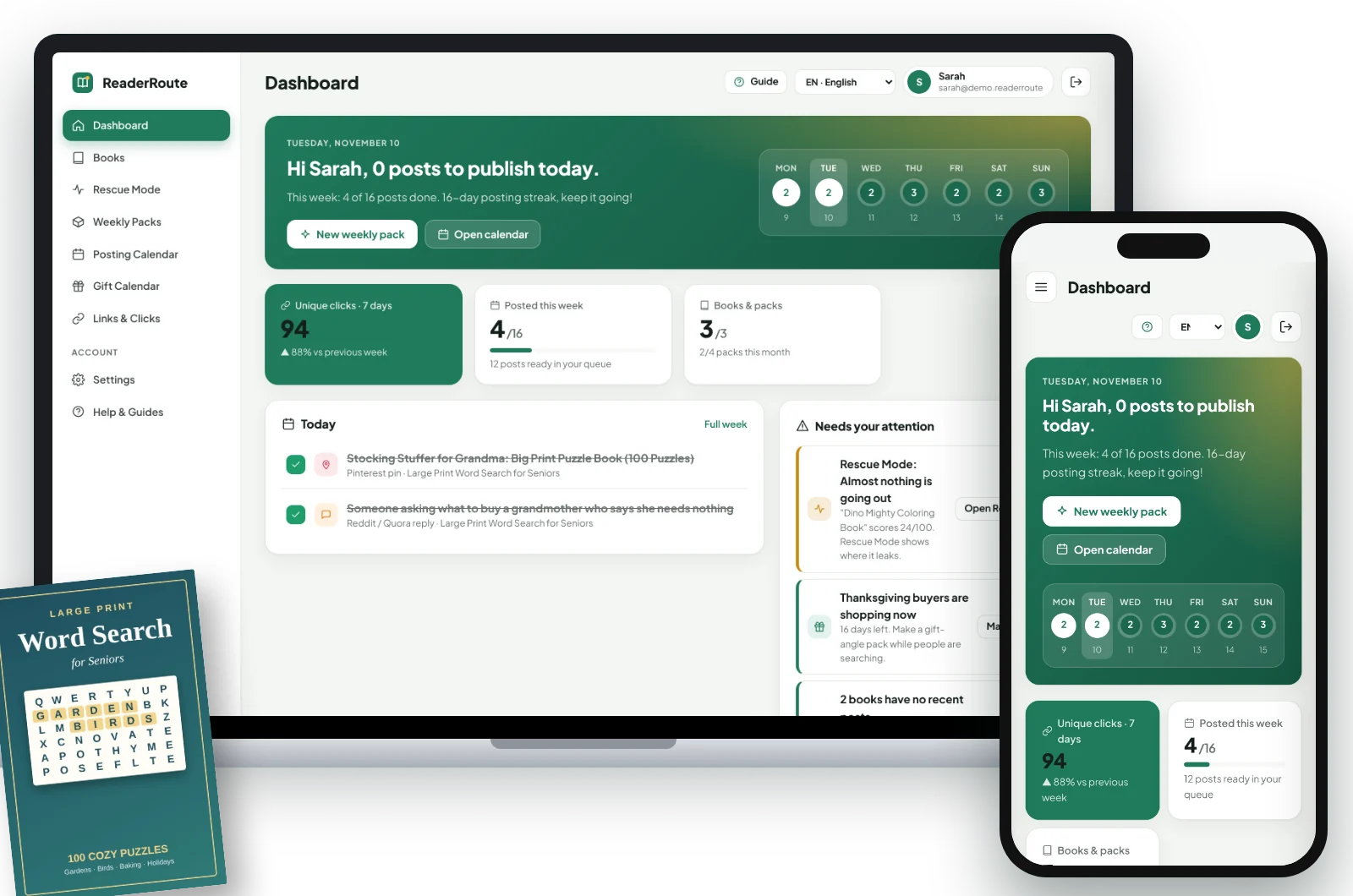
- Gives you the posts. A full week of content is ready for you, including pins, carousels, scripts, answers and a pitch.
- Puts them on a calendar. You can see what to post and when, instead of trying to remember it all yourself.
- Tracks every click. You can see what sends shoppers to your listings, so you can stop guessing and do more of what works.
Two things about the approach matter if you’re short on time or money. First, there is no ad budget involved. The aim is to send real shoppers to your listings without paying for clicks. Second, there is no face on camera, so you don’t have to put yourself in front of an audience.
In short, this ReaderRoute review is about a tool that tries to turn “what should I post?” into a clear weekly routine. It focuses on the habit of showing your books to the right people, then watching what happens.
Who Created ReaderRoute and Why
ReaderRoute comes from Le Dang Vu, who says he has spent years in the online marketing world. According to the sales material, that background shaped how he looked at the way small sellers promote their books.
He describes seeing the same pattern again and again among low-content and Etsy sellers:
- Great products. The books themselves were often solid.
- No plan. Sellers didn’t have a clear idea of what to post or where.
- No time. Marketing had to fit around everything else they were already doing.
- No way to tell what was working. Without tracking, it was hard to know which effort brought in a buyer.
He also points to a gap in the tools available. In his view, they either handled one small piece of the job (a prompt, a template, a pin designer) or were built for big publishers with big budgets. Nothing, he says, spoke directly to a regular seller with a simple answer to four questions: who buys your book, what to post this week, where to post it, and what happened afterward.
That is the gap he built ReaderRoute to fill. He calls it the tool he wanted every small seller to have: a calm, clear weekly plan for getting your books seen, without ads, without spam and without living on social media.
It’s worth remembering that this is the creator’s own account of his motives, so read it as his pitch rather than an independent endorsement. Still, the problem he describes is a real and common one for self-publishers: finishing the book is only half the job.
Why the Usual Book Marketing Advice Falls Short
Most advice for new KDP and Etsy sellers sounds sensible. The trouble is that each piece of it leaves a gap, and the sales page behind ReaderRoute points out four of them.
Ads eat your royalty
The first suggestion is usually to run ads. But on a $7.99 paperback, the sales page says your royalty might be about $2. A few clicks at a dollar each and you could be paying Amazon to sell your book. And when you stop paying, the sales stop too.
The empty Pinterest box
The free alternative is posting on social media. Then comes the blank box: you open Pinterest, stare at it, write something half-hearted and hope for the best. The following week gets busy, so you skip it.
Prompts aren't posts
AI prompts look like a shortcut, but the sales page argues they only do part of the job. You still have to pick one, tweak it, fix the output, schedule it and remember to repeat the whole process next week.
Consistency without tracking
You’ll also hear “just be consistent.” The question is: consistent at what? Without tracking, you can’t tell which post brought a buyer and which one wasted your Sunday afternoon.
Taken together, these are the gaps this ReaderRoute review will look at: a paid-only approach, no clear plan for what to post, unfinished content and no feedback. The sales page’s message is that these aren’t personal failings. You’re a creator, not a full-time marketing department.
What You Get Inside ReaderRoute
Each week, ReaderRoute gives you a full week of done-for-you posts. The aim is to take the “post what?” question off your plate, so you can spend your time getting your books in front of shoppers.
Know Who Buys, and What They Type
The plan starts with who pays for your book and what they type. That means understanding the buyer and the words they use when they search. The posts are then written for those people, rather than for a general audience.
The Content in Your Weekly Plan
The research notes list the formats you receive:
- Pins for Pinterest
- Carousels
- Scripts
- Answers
- A pitch
The product information doesn’t go into detail on how each format works, so I won’t guess. What it does make clear is that the posts are written for you, so you aren’t starting from a blank box or editing a raw prompt.
A Calendar and Click Tracking
Everything is placed on a calendar, so you can see what to post and when. ReaderRoute also tracks every click. That helps you see which posts send people to your listings and which ones don’t, so you can do more of what works.
What It Doesn't Require
The tool is built around no ad budget and no face on camera. If you want to see how the weekly system works for yourself, you can check out ReaderRoute through this page.
ReaderRoute Key Details at a Glance
| Feature | Details |
|---|---|
| Product type | Done-for-you weekly social post system |
| Best for | Amazon KDP, Etsy and low-content sellers |
| Weekly content | A full week of ready-made posts |
| Post formats | Pins, carousels, scripts, answers, pitch |
| Planning tool | Calendar for scheduling posts |
| Click tracking | Tracks every click |
| Ad budget needed | No |
| On-camera required | No |
| Pricing model | One-time payment |
| Money-back guarantee | 30 days |
| Access | Instant |
ReaderRoute Pros and Cons
Pros
- Gives you a full week of ready-made posts each week, so you aren't staring at an empty box wondering what to write.
- Puts the posts on a calendar and tracks every click, so you can see what is actually sending shoppers to your listings.
- Doesn't rely on paid ads or appearing on camera, which suits sellers with small royalties or who want to stay out of the spotlight.
- Built specifically for Amazon KDP, Etsy and low-content sellers, with content aimed at the people who buy your books.
- Low-risk purchase terms: a one-time payment, instant access and a 30-day money-back guarantee.
Cons
- The materials describe several content formats (pins, carousels, scripts, answers, pitch), but don't say which platforms are covered beyond Pinterest being mentioned, so check before buying that it covers where you want to post.
- There is no independent proof of results in the information provided, such as sales figures, case studies or third-party reviews, so the promised benefits are the seller's own claims.
- You still need to do the posting and keep up the weekly habit yourself; the tool supplies the posts and plan, not the consistency.
ReaderRoute FAQ
What is ReaderRoute?
ReaderRoute is a tool that gives you a full week of done-for-you posts written for the people who actually buy your books. It places them on a calendar and tracks every click, so you can see what is sending shoppers to your listings.
Who is ReaderRoute for?
It is aimed at Amazon KDP sellers, Etsy sellers and low-content book sellers. It is built for small sellers who have published their books but have no simple system for promoting them.
Do I need an ad budget or need to appear on camera to use ReaderRoute?
No. The product is described as needing no ad budget and no face on camera. The idea is to get your books seen through weekly posts rather than paid clicks.
What kinds of content does ReaderRoute provide?
The product information mentions pins, carousels, scripts, answers and a pitch. It also covers who pays for your book and what those buyers type when searching.
How does ReaderRoute track results?
It tracks every click on your posts. The goal is to let you see which posts bring in shoppers, so you can do more of what works instead of guessing.
How does ReaderRoute pricing and refund work?
It is listed as a one-time payment with instant access and a 30-day money-back guarantee. Check the official page for the current price, as it can change.
Verdict: Who Should Buy ReaderRoute?
If you sell on Amazon KDP or Etsy and your books are sitting unseen after you hit publish, this ReaderRoute review ends on a fairly clear note: it looks like a sensible fit for you. It’s built around the part most sellers struggle with, which is showing up every week with the right posts and knowing what’s working.
ReaderRoute is likely a good match if you:
- Sell KDP books, Etsy products or low-content titles.
- Don’t want to pay for ads or appear on camera.
- Find it hard to decide what to post, or to stay consistent.
- Want click tracking so you can see which posts actually send shoppers to your listings.
It may not suit you if you’d rather rely on paid ads, or you’re not willing to post on a regular basis. The posts are done for you, but you still need to publish them and keep the habit going.
It’s also worth being realistic. ReaderRoute is not a magic fix, and results are not guaranteed. Sales depend on your books, your niche, your listings and how consistently you follow the plan. What it offers is structure and feedback, not a promise of income.
The one-time payment and 30-day money-back guarantee lower the risk of trying it. If a simple weekly routine is what you’ve been missing, it’s worth a closer look. You can see the full details through the official ReaderRoute page.
